Cancer researchers found it first
Kisspeptin Came From Cancer Work, Then Puberty Studies
You'll learn what Kisspeptin starts, what happened in small tests, and which questions doctors still can't answer for you or your care. ¹
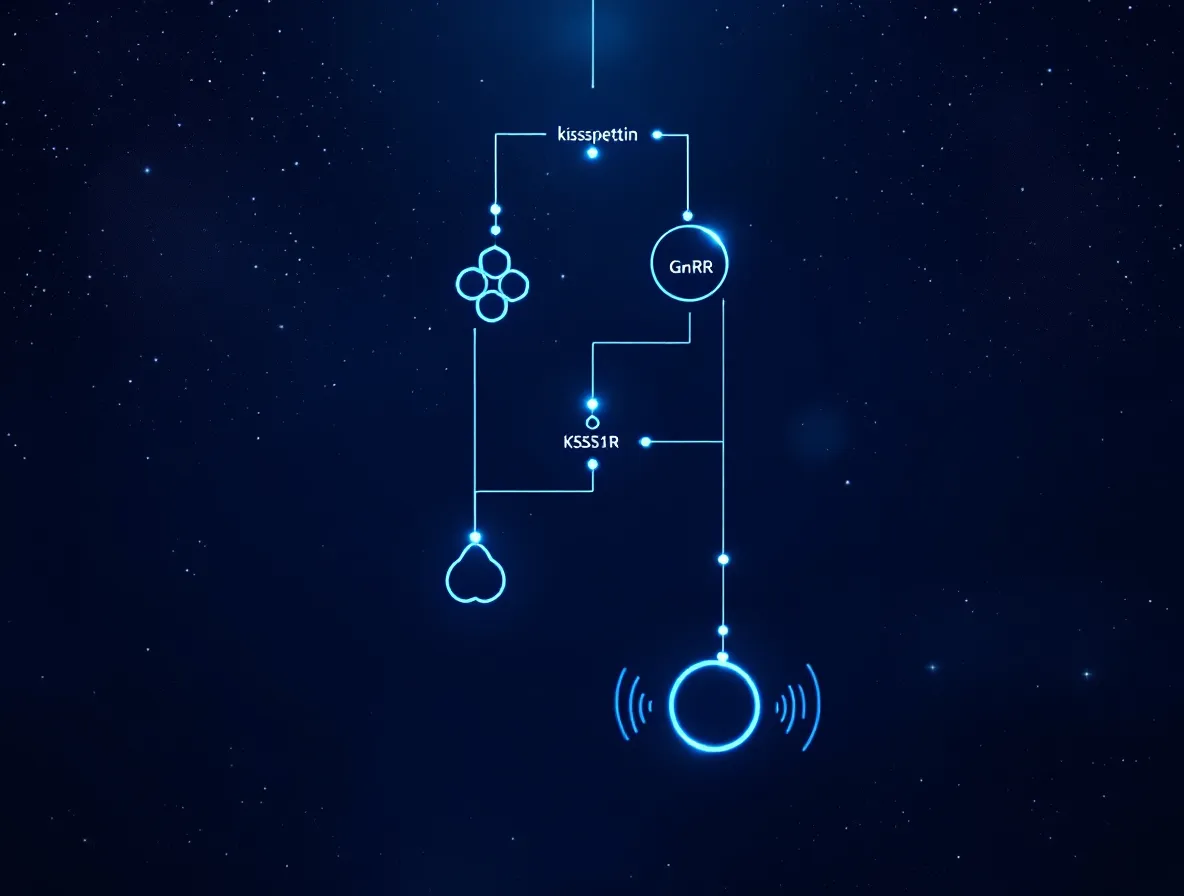
How Kisspeptin begins the hormone chain
Melanoma researchers first found the gene for Kisspeptin. A gene carries directions inside a cell. They hoped to learn why skin cancer spread. Later teams learned where your body makes the protein: the brain.
Kisspeptin fits a receiving spot on a brain cell. A hormone then leaves that cell. It reaches the pituitary gland (a pea-size gland under your brain). The gland adds two hormones to your blood, guiding puberty, egg release, sperm growth, and sex-hormone production.
Small studies now test Kisspeptin in puberty and fertility care. Fertility care helps when having a baby is hard. Health agencies haven't approved Kisspeptin. You also can't treat it as a food supplement.
The first response can fade during repeated shots or a steady drip. Your blood may show that fading within days. The effects page includes accounts from people who tried research vials. Their experiences can't tell you how your body would respond.
What small Kisspeptin tests found
A small 2003 study involved people whose brain cells couldn't receive Kisspeptin from birth. Their bodies made too little of two hormones needed for puberty, so puberty never began. Mice with a matching inborn fault had the same problem [1]. The protein needs that cell spot to work [1].
Another brief study gave healthy men a single vein dose. Researchers used a form built from 10 protein pieces. The amount was 1 microgram, or one-millionth of a gram, for each kilogram the man weighed. You can't treat that as a home dose.
Within 30 minutes, luteinizing hormone rose. This hormone tells the testes to produce testosterone. A faster drip caused a testosterone rise too [3]. The paper didn't establish safety for you at that amount.
A third small study followed women after their periods stopped. Repeated blood draws showed that luteinizing hormone wasn't arriving in regular bursts before egg release. Kisspeptin-54 restored those bursts during the test [4]. The finding can't identify what stopped your periods or choose your care.
A clinic test watched women at high risk of dangerous ovary swelling. One kisspeptin-54 shot helped eggs finish growing in 95% of the women. Not one had moderate, severe, or critical swelling [5]. The report didn't state whether mild swelling occurred, so your own risk could be quite different.
A study amount only describes what one group received. It isn't an amount for you to try. The Kisspeptin mechanism of action page traces the body steps. The Kisspeptin research page sets out the tests and their limits.
What Kisspeptin starts without replacing
Kisspeptin makes brain cells release gonadotropin-releasing hormone. That brain hormone tells the gland beneath your brain to act. Kisspeptin doesn't supply testosterone or the two hormones released by that gland [1]. It starts their release, but it isn't a sex hormone.
Studies mainly use two forms. Kisspeptin-10 is short, and your blood breaks it down fast. Kisspeptin-54 is longer and remains in the blood longer. Older papers call the long form metastin, and both forms begin the same body steps [3].
The kisspeptin peptide page sorts out those names. The Kisspeptin effects page separates personal experiences from watched tests. Neither page offers a product. You won't find a use plan there.
How cancer work led to Kisspeptin hormone studies
Kisspeptin didn't begin in a sex-hormone study. In 1996, a team found its gene while studying human melanoma. Cancer cells with that gene spread less in mice, though the cancer still grew. The name honored Hershey, Pennsylvania [8].
Around 2001, another team found where Kisspeptin lands on a cell. A 2003 study tied that receiving spot to normal puberty [1]. Cancer work had led to a new hormone question. This history helps you keep the two kinds of papers apart.