Cancer findings came before hormone tests
Kisspeptin Research: Who Was Tested and What Happened
First come the limits: few people and little time. Then you'll see which changes held up and what they mean for your questions.
Where Kisspeptin research began and where it went
In 1996, cancer researchers found the gene for Kisspeptin while studying why tumors spread. They weren't looking for a puberty hormone. Work in 2003 showed that the gene also helps puberty begin. That finding opened the door to tests in people.
Most human tests were small and brief. Even so, Kisspeptin often raised luteinizing hormone, which helps the ovary let an egg go. In men, the same hormone tells the testes to produce testosterone. Some tests also restarted monthly cycles or helped eggs finish growing during fertility care.
A blood change isn't the same as better health for you. A steady amount can also lose its first effect within days. Your cell's receiving spot begins to ignore repeated Kisspeptin. No amount from these tests is a plan for you or your doctor.
What early Kisspeptin work did and didn't prove
The first cancer work used cells and mice, not people receiving care. In 1996, researchers added the Kisspeptin gene to human melanoma cells. Those cells spread less in mice, though the tumors kept growing [8]. The gene's name came from Hershey, Pennsylvania.
A 2006 review looked across more cancer work. Kisspeptin and its receiving spot often appeared when cancer spread less [9]. That link didn't prove cause and effect. It also couldn't settle your cancer risk or explain puberty.
A different question emerged in 2003. People unable from birth to receive Kisspeptin didn't begin puberty. Mice missing the same cell function had the same trouble [1]. One girl had the opposite change.
Her receiving spot stayed active too long, and puberty began too soon [10]. In another family, a faulty Kisspeptin gene kept puberty from starting [11]. Together, the cases showed that your body needs both the protein and its landing place. They don't explain every case of early or late puberty.
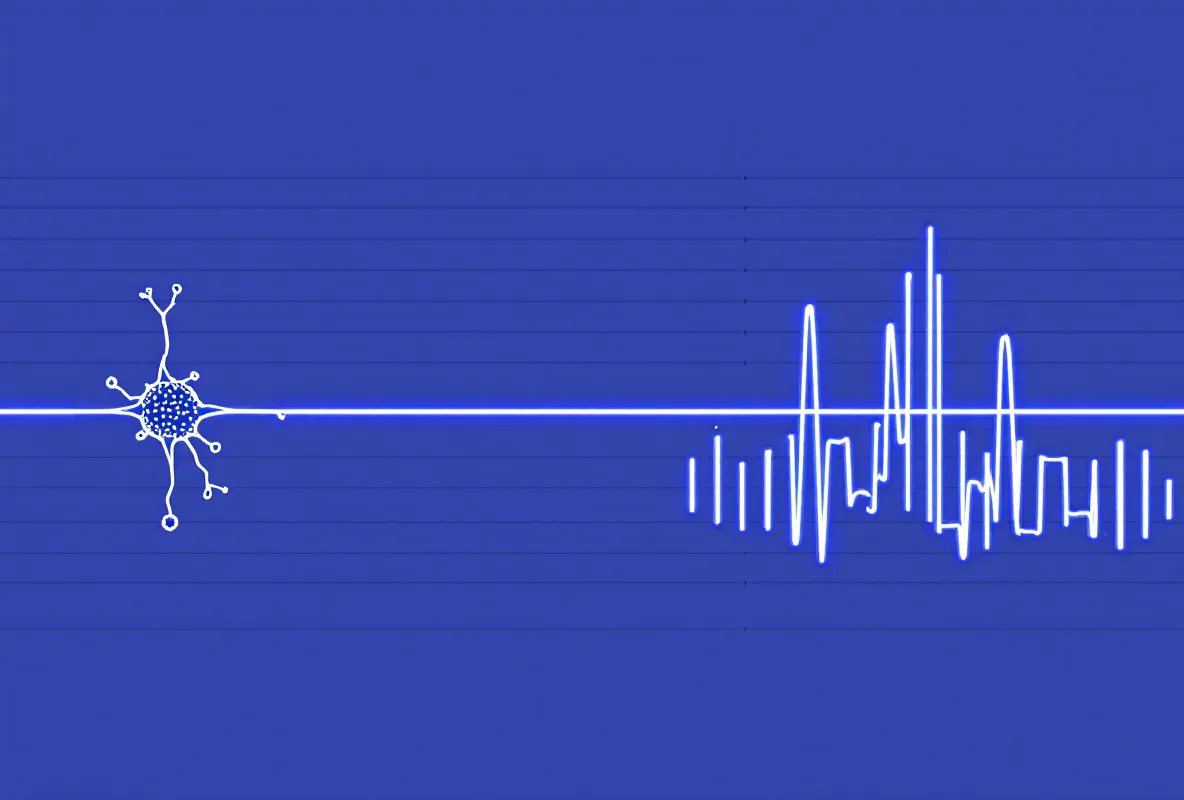
How Kisspeptin made mouse brain cells fire
This test used mouse brain slices in a dish. No person took part. The liquid held 100 nanomoles in each liter, which made a very weak lab mix. That isn't an amount for you.
About 75% of adult cells increased their firing by 87 percent, give or take 4% [2]. A 6 millivolt change came first, give or take 1. A millivolt measures tiny electrical force. The fast firing showed why that change mattered.
Calcium and potassium crossed openings in the cell wall. Their movement changed the charge. The cell fired and released a brain hormone. You can follow the same steps on the kisspeptin mechanism of action page.
How men's blood responded to Kisspeptin
This short study involved healthy men, so it can't answer your case. Researchers gave one vein dose of 1 microgram, or one-millionth of a gram, for every kilogram the man weighed. Luteinizing hormone rose within 30 minutes. That hormone prompts the testes to produce testosterone.
A steady drip made luteinizing hormone rise more often. The amount was 4 micrograms, or four-millionths of a gram, for each kilogram every hour. Testosterone rose too [3]. These blood results didn't prove that any man felt better.
The test showed that kisspeptin-10 can start a man's own hormone release. Kisspeptin-10 is the short form. Neither amount guides your care. Doctors watched the men closely.
How Kisspeptin affected women with stopped periods
The first study was small and involved women after their periods had stopped. Their brains released luteinizing hormone too slowly. A kisspeptin-54 vein drip brought back separate bursts. Over 8 hours, those bursts came more often and grew stronger [4].
The fastest drip began losing its effect during the test. Another kisspeptin-54 study followed healthy women early in their monthly cycle. One injection beneath the skin raised hormones used for egg growth and release [14]. Women starting with more estrogen had the larger rise.
Neither study explains why your cycle stopped. The findings only show brief blood changes under close care. They can't choose a treatment for you. Your doctor must check other causes.

What Kisspeptin did during fertility care
This Phase 2 study was an early test, not final proof. It included 60 women at high risk of dangerous ovary swelling. That problem can enlarge the ovaries and make a woman quite sick. Each woman received one kisspeptin-54 injection beneath the skin.
The shot helped eggs finish growing in 95% of the women. No woman had moderate, severe, or critical ovary swelling. The report didn't state whether a mild case occurred. The highest live-birth result, 62%, came with one tested amount [5].
Kisspeptin starts the woman's own brief luteinizing hormone rise. Older medicines used to mature eggs may keep that rise going longer. The shorter rise might explain the result. This study can't show your risk or prove greater safety for you.
What one Kisspeptin nose-spray test found
The nose-spray test was new, small, and short. In 2025, healthy men and women tried kisspeptin-54 this way. Women with stopped periods also took part. Luteinizing hormone rose in all groups, and the team reported no bad event [6].
Healthy men and women with stopped periods had the larger rises. The smaller rise occurred in healthy women. No blood result proved a health gain for you. The study spray stayed strong for up to 60 days at 4 degrees celsius.
That's about refrigerator cold. No earlier human test had shown a blood response from this nose spray. A second 2025 paper reviewed work through February 2023. Its authors found 29 human trials [7].
Those trials covered puberty, periods, ovaries, birth, nursing, and fertility care. The review reported fewer side effects than other study drugs. It gave no named, side-by-side drug test. You can't use that claim to judge safety for your care against one drug.
What Kisspeptin research still can't answer
One artery warning comes only from mice. The animals received kisspeptin-10 for four weeks. Fatty patches in their main artery enlarged and became easier to break. A blocking drug stopped the harm [13].
No human study has reported that artery problem. The mouse result can't tell you your risk. It doesn't prove the same harm occurs in people. Longer tests in people are missing.
A 2018 test involved children whose puberty had started late. Some showed an adult-like hormone response after Kisspeptin [12]. Others didn't. The test might show whether a child's hormone system has started changing toward adulthood.
That test isn't approved and can't find the cause of late puberty. Another paper suggested that certain Kisspeptin brain cells help control body heat and a sex hormone [15]. The idea wasn't tested as a cause of hot flushes. It can't explain your symptoms without more proof.