One brain cell starts several body steps
Kisspeptin Mechanism of Action: How Hormone Release Starts
You'll track how one brain cell changes your blood hormones, then see why a nonstop message may stop working for you.
How Kisspeptin moves hormone release from brain to blood
The scientists who first found Kisspeptin were studying melanoma. They wanted to learn why cancer cells spread. Later teams found where the protein acts in your brain. One brain cell starts a process that ends with sex hormones.
First, Kisspeptin fits a receiving spot on that brain cell. Charged minerals move through small openings in the cell's outer wall. Their movement changes its electrical charge and makes the cell fire. Think of one switch turning on the next.
The firing cell sends out a hormone in brief bursts. That hormone reaches the pituitary gland (a pea-size gland beneath your brain). The gland adds two hormones to your bloodstream. Those hormones act on the ovaries or testes.
The order matters for your body. Kisspeptin starts the brain-cell firing, and the gland responds next. Sex hormones rise farther down the process. Kisspeptin begins the work but doesn't supply every hormone.
Step 1 — Where Kisspeptin reaches a brain cell
Kisspeptin first fits a receiving spot on a brain cell [1]. Kisspeptin-10 and kisspeptin-54 both fit that spot. Either form can start the same process in your body. Your cell must receive the protein before hormone release begins.
People born with changes in the gene for that spot gave the clearest proof. When the spot didn't work, puberty didn't begin [1]. A change that kept it active made puberty begin too soon. This first step can have a large effect on your later hormones.
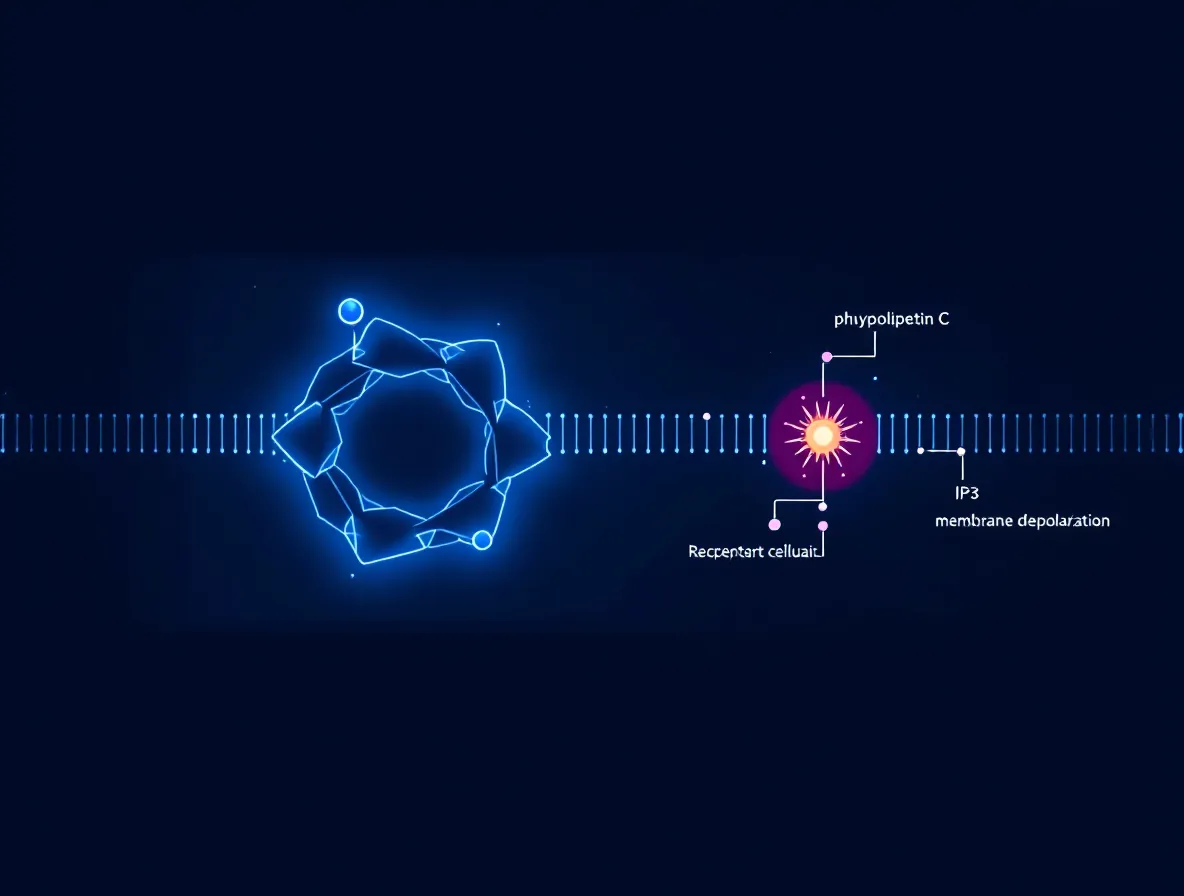
Step 2 — How Kisspeptin makes the cell fire
The test placed slices of mouse brain in a dish. No people took part. The liquid held 100 nanomoles in each liter, making a very weak lab mix. That isn't an amount for you.
About 75% of adult cells increased their firing by 87 percent, give or take 4% [2]. Their charge first moved by 6 millivolts, give or take 1. A millivolt measures tiny electrical force. The fast firing showed why the change mattered.
Calcium and potassium moved through the cell's surface. That changed the charge. The cell fired and released a hormone. The mouse result can't predict your brain's response.
Step 3 — Why the Kisspeptin message comes in bursts
Your brain cells don't fire without a pause. One group helps turn each brief burst on and off [15]. Kisspeptin then makes the cells that control your pituitary gland fire in that stop-and-start pattern. The gland responds to each burst in your body.
A second group of Kisspeptin cells helps cause the hormone rise before egg release. In one study, men had more of these hormone bursts after Kisspeptin [3]. A brief burst and a nonstop message don't act alike. Your receiving cells may stop answering repeated exposure.
Step 4 — What the pituitary hormones do after Kisspeptin
A brain hormone reaches your pituitary gland under the brain. The gland then releases luteinizing hormone into your blood. That hormone helps an egg leave the ovary. In men, it prompts testosterone production in the testes.
The gland also releases follicle-stimulating hormone. That hormone helps an egg grow or helps the testes make sperm. Together, the two hormones lead to sex-hormone changes. Researchers often check luteinizing hormone first to learn whether Kisspeptin started the next step [3].
What Kisspeptin doesn't supply and why its effect can fade
Kisspeptin isn't the brain hormone, either pituitary hormone, or any sex hormone. Your own cells make and release those later hormones [1]. This difference matters when you read a claim about a product. Kisspeptin starts the process but doesn't replace what follows.
The early effect can fade in your body. A receiving spot may stop answering a steady or repeated message. In one human study, the hormone rise in blood faded within days [16]. More Kisspeptin doesn't promise a stronger result for you.